Every Process Has an SOP. So Why Do Defects Still Happen?
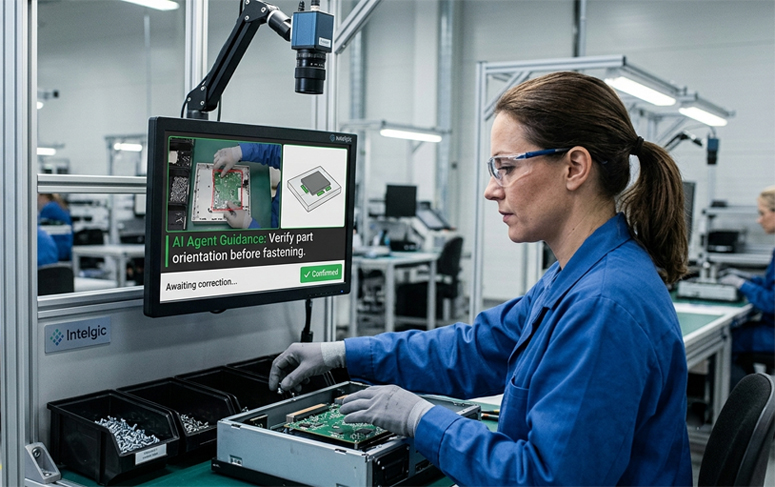
Every manufacturing operation follows a defined process. Whether it involves assembly, drilling, stamping, part handling, machine operation, or packaging, manufacturers establish Standard Operating Procedures (SOPs) and work instructions to ensure consistent product quality.
Yet manufacturing defects continue to occur. Why? Because having an SOP does not guarantee that every operator follows every step correctly, every time.
An operator may skip a step, select an incorrect component, position a part incorrectly, or execute an operation in the wrong sequence. These small process deviations can create defective products, increase rework, and cause costly quality failures.
Traditional quality inspection detects defects after they have already occurred. What if manufacturers could identify process deviations while they are happening and help operators correct mistakes before defective products are created?
Intelgic makes this possible with its AI-powered SOP monitoring and process assurance platform. Using industrial cameras and advanced AI, Intelgic continuously monitors manufacturing activities, detects deviations from approved work instructions, and guides operators to correct mistakes in real time.
Intelgic deploys AI Agents at individual manufacturing stations that act as intelligent co-workers, helping operators perform the right activity, in the right sequence, at the right time.
Why Process Deviations Are a Major Cause of Manufacturing Defects
Manufacturing quality depends not only on machines and materials but also on how consistently production procedures are executed. Even minor deviations can affect the final product. Consider a few common examples:
An operator forgets a washer before tightening a bolt.
A component is placed in the wrong orientation or fixture.
The wrong part or drilling location is selected.
A part is not positioned correctly before the operation.
A required component or accessory is missing.
An incorrect setup or loading sequence is followed.
An operator skips a mandatory gauge inspection checkpoint.
These errors may remain undetected until final inspection, downstream assembly, or even customer use. By that stage, correcting the defect can require additional labor, materials, machine time, or product replacement.
The later a deviation is discovered, the more labor, material, and machine time it takes to correct.
Verify the manufacturing process itself—not only the final product.
Intelgic’s AI-Powered Process Deviation Prevention System
Intelgic combines industrial cameras, computer vision, AI-based activity recognition, and intelligent process monitoring to verify how manufacturing operations are performed.
The system observes operators, components, tools, and machines while production activities are taking place. It compares the observed activities against predefined SOPs and work instructions.
- ◆Operators & their actions
- ◆Components & part movement
- ◆Tools & machines
- ✓Predefined SOP steps
- ✓Work instruction sequence
- ✓Required process checkpoints
When a deviation occurs, the AI can immediately identify the problem, notify the operator, and provide instructions for corrective action.
The objective is not just to detect errors. It is to help operators correct them before the product moves to the next operation.
How the System Works
Each monitored operation runs through the same seven-step loop, from loading the right SOP to recording digital evidence of what was done.
- 01Load the Correct SOP
The AI system identifies the active product, work order, or manufacturing process and retrieves the applicable SOP and work instructions.
- 02Monitor Manufacturing Activities
Industrial cameras continuously observe relevant activities, including part movements, component placement, tool usage, operator actions, and machine operations.
- 03Verify Each Process Step
AI analyzes the activities and compares them against the expected sequence, required actions, and defined process checkpoints.
- 04Detect Process Deviations
The system identifies observable errors such as missing operations, incorrect part selection, improper positioning, or an incorrect operation sequence.
- 05Alert and Guide the Operator
The AI Agent provides immediate feedback explaining the deviation and the action required to correct it.
- 06Verify the Correction
The system monitors whether the required corrective action was completed. Once the applicable checkpoints are verified, the operation can proceed.
- 07Generate Digital Process Evidence
The system records verified steps, deviations, corrective actions, and process completion status for quality reporting and traceability.
8 Manufacturing Processes Where AI Can Prevent Errors
Intelgic’s process assurance can be configured for a wide range of manual and semi-automated operations. The first two start before any machining or fastening happens: putting the right parts in the right place.
Assembly Process Monitoring
Assembly operations frequently involve multiple components, tools, and sequential steps.
Common deviations
How Intelgic helps
AI monitors the assembly sequence and verifies that the required components are installed at the correct locations.
If an operator forgets a washer before tightening a bolt, the AI Agent can immediately flag the missing step and guide the operator to correct it.
Reduces assembly errors, rework, and defective products progressing downstream.
Part Handling and Positioning Verification
Incorrect handling or positioning can cause manufacturing defects even before machining or assembly begins.
Common deviations
How Intelgic helps
AI tracks part position, movement, and orientation to verify that components are handled according to approved work instructions.
Prevents positioning mistakes, incorrect processing, and handling-related quality issues.
Machining Setup and Manual Quality Inspection
Drilling, Stamping, and Machining SOP Monitoring
Many machining and metal fabrication operations depend on correct part positioning, tool selection, and setup procedures.
Common deviations
How Intelgic helps
AI verifies observable setup conditions and operator activities before the machine operation begins.
When integrated with machine controls and approved interlocks, the system can also use verified process status to support machine-operation authorization.
Reduces preventable setup errors, scrap, and machining rework.
Manual Quality Inspection Monitoring
Manual inspection procedures often require operators to check multiple locations using gauges and measuring instruments.
Common deviations
How Intelgic helps
AI tracks inspection activities, gauge interactions, and part movement to verify that required inspection checkpoints are completed. If an inspection step is skipped, the AI Agent alerts the operator before the part is released.
Illustrative example. Part release is held until the skipped checkpoint is completed and verified.
Improves inspection consistency and reduces the risk of missed quality checks.
Kitting, Picking, Packaging, and Labeling
Kitting and Component Picking Verification
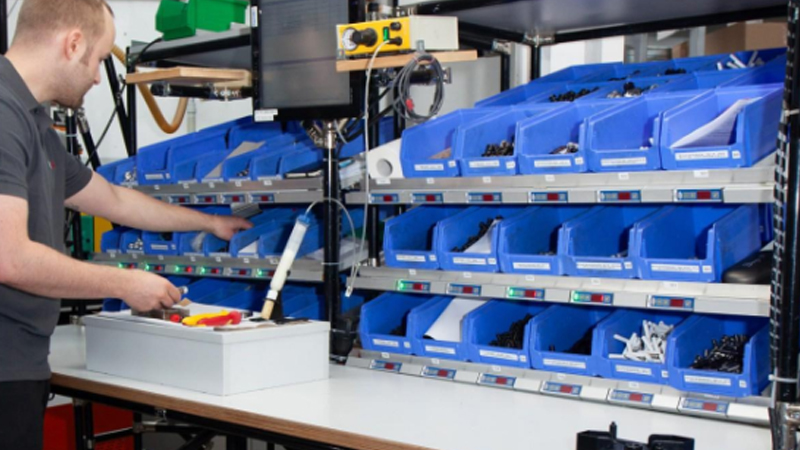
Kitting operations require operators to select components from different bins and prepare complete assembly kits.
Common deviations
How Intelgic helps
AI recognizes components, monitors picking activities, and verifies the required component quantities against the active bill of materials.
Reduces incomplete kits, assembly delays, and customer complaints.
Packaging and Labeling SOP Monitoring
Packaging errors can lead to product returns even when the manufactured product itself is defect-free.
Common deviations
How Intelgic helps
AI monitors packaging activities and verifies the required components, materials, and visible labeling checkpoints before the package is completed.
Reduces shipment errors, returns, and customer dissatisfaction.
Machine Changeover and Maintenance Procedures
Machine Operation and Changeover Verification
Incorrect machine setup is a common source of manufacturing quality problems.
Common deviations
How Intelgic helps
AI monitors visible setup and changeover activities to ensure required operations are performed before production begins.
Integration with PLCs and machine systems can provide additional confirmation of process parameters that cameras cannot directly observe.
Reduces startup defects, setup mistakes, and production interruptions.
Maintenance and Equipment Servicing SOP Monitoring
Maintenance procedures often contain critical steps that must be performed in the correct sequence.
Common deviations
How Intelgic helps
AI monitors observable maintenance activities and verifies selected procedural checkpoints.
Improves maintenance consistency, documentation, and equipment reliability.
AI monitoring supplements required safety procedures and does not replace physical verification, safety interlocks, or approved lockout/tagout practices.
AI Agents: Intelligent Co-Workers at Every Manufacturing Station
The most important advancement in Intelgic’s approach is the deployment of AI Agents directly on the manufacturing floor.
Instead of relying solely on supervisors or static work instructions, each workstation can have a dedicated AI Agent that understands the manufacturing activities expected at that station.
What Does a Shop-Floor AI Agent Do?
The AI Agent uses the station’s approved SOP, production recipe, and work instructions to determine which activities must be performed.
It analyzes camera feeds and, where integrated, machine signals to understand the current manufacturing activity.
It identifies observable skipped steps, incorrect actions, and process deviations.
It tells the operator what went wrong and how to correct the mistake using approved work instructions.
It checks whether the required activity or correction has been performed before marking the checkpoint complete.
The platform can use reviewed process data to improve detection models, analyze recurring deviations, and support continuous process improvement.
Example: An AI Agent Supporting an Assembly Operator
Consider an assembly process requiring five operations. If the operator skips the gasket and attempts to install the cover, the AI Agent detects the missing step.
- 1Position the base componentVerified
- 2Install the gasketMissing
- 3Place the coverBlocked
- 4Insert four boltsPending
- 5Perform the fastening operationPending
“Gasket installation incomplete. Install the gasket before placing the cover.”
Illustrative workstation display.
The operator corrects the mistake, and the AI verifies that the gasket installation is complete. The process can then continue.
Without AI monitoring, the error might only be discovered during final inspection or product testing.
With Intelgic, the operator gets assistance at the moment it matters most.
From Error Detection to Real-Time Error Correction
Traditional quality control and AI-powered process assurance address different stages of manufacturing.
The shift is from detecting defective products to preventing avoidable manufacturing errors.
Not every process deviation can be corrected before causing damage. Some errors are irreversible once a machine cycle begins. For such operations, the AI system can support pre-operation verification, alerts, and approved control-system interlocks.
Digital Proof of SOP Compliance
Manufacturers often rely on paper checklists or operator confirmations to document process compliance. However, a completed checklist does not necessarily prove that every required operation was performed correctly.
Intelgic’s AI platform creates digital evidence of observable manufacturing activities. For each part or production order, the system can record:
Example: SOP Compliance Record
| Checkpoint | Time | Event | Status |
|---|---|---|---|
| 1 · Base positioned | 09:14:02 | Verified on first attempt | Verified |
| 2 · Gasket installed | 09:14:41 | Missed → operator alerted → corrected | Corrected |
| 3 · Cover placed | 09:15:08 | Verified after correction | Verified |
| 4 · Four bolts inserted | 09:15:30 | 4 of 4 detected | Verified |
| 5 · Fastening | 09:15:52 | Sequence completed | Verified |
Illustrative record, not actual customer data. Each checkpoint can be linked to timestamped image or video evidence.
All required checkpoints verified. One deviation detected and corrected at the workstation before release.
Quality engineers can review the data to identify recurring problems, improve work instructions, and investigate quality failures. This helps manufacturers move toward objective, data-driven process assurance.
Beyond Monitoring: Manufacturing Process Intelligence
Deploying AI Agents across multiple production stations creates opportunities beyond individual error detection.
Analyze which process steps generate the highest number of deviations and identify opportunities for improved instructions or workstation design.
Use real manufacturing scenarios and approved corrective guidance to help new operators learn complex production processes.
Analyze repetitive movements, unnecessary actions, and process delays to identify opportunities for productivity improvements.
Correlate recorded process deviations with downstream inspection results to investigate potential defect causes.
Provide centralized dashboards showing checkpoint completion, deviation frequency, corrective action status, and process performance across manufacturing stations.
Business Benefits of AI-Powered Process Deviation Prevention
Identify observable process errors early and enable corrective action before defective products progress further.
Reduce errors that otherwise require rework or repeated inspection.
Reduce scrap, rework, customer returns, and other costs associated with preventable process failures.
Apply the same defined process verification criteria across workstations and production shifts.
Provide contextual guidance that reduces the need to repeatedly consult printed SOPs or request supervisory assistance.
Create auditable records showing which manufacturing checkpoints were completed and where corrective actions occurred.
Use deviation data to identify recurring weaknesses and improve manufacturing workflows.
Why Intelgic for AI-Based Process Assurance?
Intelgic develops industrial AI solutions designed to monitor, verify, and improve manufacturing processes. Our approach combines industrial cameras, advanced computer vision, AI Agents, and manufacturing system integration.
The platform can be configured to:
Intelgic’s approach supports manual, semi-automated, and selected automated manufacturing operations. Every station can have an AI Agent configured to understand its specific manufacturing workflow, inspection requirements, and approved corrective actions.
The Future of Manufacturing: Every Operator Has an AI Co-Worker
Manufacturers invest significant resources in defining SOPs, training operators, and implementing quality control procedures. The next opportunity is to verify that these procedures are consistently followed during production.
AI-powered process monitoring introduces a new layer of intelligence to the manufacturing floor. Instead of waiting for inspection to identify a defective product, manufacturers can recognize deviations while operations are being performed and assist operators in correcting mistakes.
Intelgic’s vision is a manufacturing floor where every operator has an AI co-worker—continuously monitoring the process, identifying mistakes, providing guidance, and helping ensure that each operation is performed correctly.
Prevent the Error Before It Becomes a Defect
Manufacturing quality does not begin at the final inspection station. It begins with every operation performed on the production floor.
A missed component, incorrect part orientation, skipped inspection, or wrong machine setup can create defects that become increasingly expensive to correct downstream.
Intelgic’s AI-powered SOP monitoring and process assurance solution helps manufacturers detect process deviations in real time, guide immediate correction, and verify that required work instructions have been followed.
By deploying AI Agents at manufacturing stations, Intelgic helps transform SOPs from static documents into actively monitored, intelligent workflows.
Frequently Asked Questions
What is process deviation in manufacturing?
A process deviation occurs when a manufacturing activity does not follow the approved SOP, work instructions, production sequence, or defined operating conditions.
How can AI prevent process deviations?
AI uses cameras and, where available, machine data to monitor manufacturing activities, identify deviations from approved procedures, and provide immediate corrective guidance.
What is AI-powered SOP monitoring?
AI-powered SOP monitoring uses computer vision and activity recognition to verify that manufacturing operations are performed according to predefined standard operating procedures.
Can AI detect operator mistakes in real time?
Yes. AI can detect trained, observable errors such as missing components, incorrect part placement, skipped process steps, and wrong assembly sequences. Detection performance depends on visibility and application-specific validation.
How do Intelgic’s AI Agents assist manufacturing operators?
Each AI Agent monitors a workstation’s configured activities, identifies process deviations, provides contextual guidance, and verifies observable corrective actions.
Can AI monitor both operators and machines?
Yes. Cameras can monitor visible operator and machine activities, while integrations with PLCs and other systems can provide additional machine-state and process information.
Can AI prevent defective products from moving to the next process?
The platform can identify incomplete checkpoints and generate alerts. Where approved manufacturing-system integration is available, verified process status can also be used to control workflow release.
Does AI SOP monitoring replace human operators?
No. The objective is to support operators with intelligent guidance and process verification, not replace their judgment or expertise.
Can the system monitor assembly, stamping, packaging, and inspection processes?
Yes. Intelgic’s solution can be configured for different manufacturing workflows, including assembly, part handling, machining preparation, packaging, kitting, and manual quality inspection.
Can AI generate digital proof of SOP compliance?
Yes. The system can record verified process checkpoints, timestamps, deviations, corrective actions, and relevant visual evidence for configured, observable operations.
Can the system support different SOPs for different products?
Yes. Configurable process recipes can be associated with different product models, work orders, and manufacturing stations.
Can AI SOP monitoring integrate with existing MES and ERP systems?
Yes. Integration can allow the system to retrieve production orders, SOP instructions, product information, and report verification results.
How does AI process monitoring reduce manufacturing costs?
By helping prevent process errors, manufacturers can potentially reduce scrap, rework, repeated inspection, production delays, and customer-related quality costs.
What is the difference between AI quality inspection and AI process assurance?
AI quality inspection evaluates manufactured products for defects. AI process assurance monitors how manufacturing activities are performed and helps identify mistakes before they produce defects.
How can manufacturers implement Intelgic’s AI SOP monitoring solution?
Implementation begins by identifying critical processes, reviewing SOPs, selecting observable checkpoints, and evaluating workstation imaging requirements. Intelgic can then configure and validate AI monitoring, operator guidance, and production-system integrations for the selected application.